AgentX replaces manual engineering work in industrial recommender systems with a multi-agent pipeline that generates proposals, writes code, and validates changes autonomously. It's a concrete step toward self-maintaining ML systems in production.

machine learningFriday, June 26
Self-improving recommenders and spherical CNNs
Today's ML research leans into two directions: making industrial recommenders self-improving, and adapting CNNs to the sphere for scientific data. Both papers share a focus on domain-specific architectures that automate or specialize beyond standard approaches.
Automated recommenders
Two papers tackle recommendation from different angles: one automates the algorithm iteration loop, the other enriches sparse metadata with multimodal data.

RAG-VisualRec provides an open pipeline for multimodal recommendation, combining LLM-generated descriptions with visual and audio features from trailers. It's a practical resource for researchers working with sparse metadata in domains like movies.
Spherical CNNs
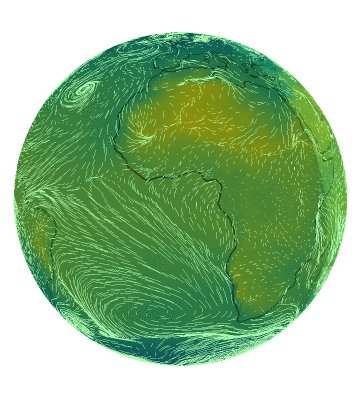
Google's research on scalable spherical CNNs brings convolutional networks to signals on a sphere, opening up scientific applications.
Scalable spherical CNNs address a gap in scientific ML: processing data on a sphere (e.g., climate or cosmology) without planar distortions. Google's work makes these networks practical for large-scale scientific datasets.
More roundups today
energy roundupAI boom faces a power shortage crisis

The Bear's final season dominates food news
legal roundupSupreme Court sides with Bayer on Roundup
Options expiry, layoffs, hack, MiCA deadline

climate roundup